
"Costa history"
2000 article(s) found

A brief introduction to the History and Culture of the Origin and Development of Fine Coffee beans in Diamond Hill Manor, Costa Rica
Excellent Costa Rican coffee is called extra hard beans, and this kind of coffee can grow at an altitude of more than 1500 meters. Altitude has always been a problem for coffee growers. The higher the altitude, the better the coffee beans, not only because the higher altitude can increase the acidity of the coffee beans and thus increase the flavor, but also because the night temperature at the higher altitude is lower, which can make the trees grow slowly.

Costa Rican Coffee Costa Rica Honey Coffee Costa Rica Ponte processing Plant
Professional coffee knowledge exchange more coffee bean information Please follow the coffee workshop (Wechat official account cafe_style) Costa Rica has a coffee history of more than 200 years. It is not only an important basis for the country's economy and people's livelihood, but also an indispensable role in the global coffee history. In the past decade, it has become popular all over the world as a micro-processing farm, in this small Central American country.
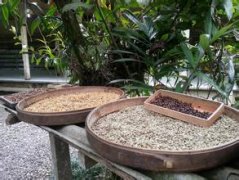
A brief introduction to the history and culture of the origin and development of high-quality Costa Rican Saint Roman coffee beans
The coffee trees planted in Costa Rica are all Arabica coffee trees, and the quality of coffee beans is better and more stable through improvement. In order to facilitate picking, coffee trees are kept at a height of about 2 meters through continuous pruning. The coffee that people eat is the taste of the seeds in the fruit that are brewed in water. After picking raw coffee beans, the peel, pulp, seed film and sun exposure must be removed.

The origin and development history and culture of the fresh and rich Phoenix Manor fine coffee beans
Costa Rica's high latitudes produce coffee beans famous in the world, rich, mild taste, but extremely sour, coffee beans here are carefully processed, it is because of this, only high-quality coffee. Tarasu, south of San Jos, Costa Rica's capital, is one of the country's most prized coffee plantations. Tarrazu in the World

A brief introduction to the history and culture of the origin and development of Costa Rican Diamond Hill boutique coffee beans with bitter chocolate.
Tarrazu in Costa Rica is one of the major coffee producing areas in the world. The coffee produced is light and pure in flavor and pleasant in aroma. Costa Rica, with its fertile volcanic soil and good drainage, is the first country in Central America to grow coffee and bananas for commercial value. Coffee and bananas are the country's main exports. In 1729, coffee was introduced from Cuba to Goth.

A brief introduction to the Origin, Development, History and Culture of Fine Coffee beans in Fenghuang Manor
Coffee was introduced into Costa Rica from Cuba in 1729. Today, its coffee industry is one of the well-organized industries in the world, with a yield of 1700 kg per hectare. Costa Rica has only 3.5 million people but 400m coffee trees, and coffee exports account for 25 per cent of the country's total exports. The volcanic soil of Costa Rica is very fertile and well drained, especially in the central part.

Introduction to the method of producing area for describing the Flavor and Development History of Costa Rican Faramie Bean varieties
Farami is located in the Tarrazu producing area of Costa Rica (Costa Rica), on slopes 1600-1700 meters south of the Taramanca Mountains, with a pleasant climate and fertile volcanic soil, jointly run by Juan Luis Fallas Mata and his wife Maria Eugenia Ramirez. Adhere to the natural agricultural law, 100% ensemble

The King of Fine Coffee-- A brief introduction to the History of Rose Summer Fine Coffee
1 the species of Geisha was discovered in the rose forest of Ethiopia in 1931 and sent to the Coffee Research Institute in Kenya, introduced to Uganda and Tanzania in 1936, introduced to Costa Rica in 1953, and Panama was introduced by Francesca from Dongba Seven Farm Garden in the 1970s. Mr. Serraxin got the seeds from CATIE, Costa Rica, and began to grow Rosa Coffee.

Costa Rican coffee beans origin history and culture
La Minita Tarrazu's coffee is locally famous but produced in limited quantities, about 72, 600kg a year, on land called La Minita, owned by nearly three generations of the McAlpine family in England. In fact, the land produces more than 450 tons of coffee per year. But Tarasu Latin America, the kind of coffee he makes,

A brief introduction to the Origin, Development, History and Culture of Fine Coffee beans in Huofenghuang Manor
Excellent Costa Rican coffee is called extra hard beans, and this kind of coffee can grow at an altitude of more than 1500 meters. Altitude has always been a problem for coffee growers. The higher the altitude, the better the coffee beans, not only because the higher altitude can increase the acidity of the coffee beans and thus increase the flavor, but also because the night temperature at the higher altitude is lower, which can make the trees grow slowly.

A brief introduction to the History and Culture of the Origin and Development of Costa Rica Saint Roman Fine Coffee beans
The coffee trees planted in Costa Rica are all Arabica coffee trees, and the quality of coffee beans is better and more stable through improvement. In order to facilitate picking, coffee trees are kept at a height of about 2 meters through continuous pruning. The coffee that people eat is the taste of the seeds in the fruit that are brewed in water. After picking raw coffee beans, the peel, pulp, seed film and sun exposure must be removed.

A brief History of Coffee cultivation in Costa Rica Coffee Manor
Coffee was first introduced in 1720 according to CR official data. Baidu sources show that 1729 were imported from Cuba. In short, coffee has taken root in CR in the 18th century. It was first planted in the central valley (central valley). In the 19th century, the government vigorously promoted the cultivation of coffee, including the allocation of land as long as it was willing to cultivate coffee, and that it could become a landowner after five years of cultivation.
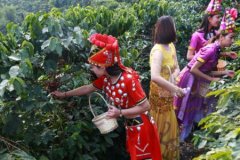
A brief introduction to the history and culture of the origin and development of Costa Rica's Saint Roman boutique coffee beans.
All the coffee trees planted in Costa Rica are Arabica coffee trees. through improvement, the quality of coffee beans is better and more stable. in order to facilitate picking, coffee trees are kept at a height of about 2 meters through continuous pruning. The coffee that people eat is the taste of the seeds in the fruit that are brewed in water. After picking raw coffee beans, the peel, pulp, seed film and sun exposure must be removed.

History, culture and story allusions of sacred boutique beans in Las Haas Manor, Costa Rica
Professional barista exchanges please follow the coffee workshop (Wechat official account cafe_style) Costa Rica Las Haas Manor San boutique beans history and culture, stories and allusions La Lajas Manor Black Honey treatment Finca Las Lajas Black Honey ■ country: Costa Rica ■ production area: central Valley ■ altitude: 1300-1500 m ■ treatment: black honey

History of Jamaican Coffee Story Coffee Story Coffee Brand Origin History and Culture Cold knowledge Collection
Professional coffee knowledge exchange more coffee bean information please follow the coffee workshop (Wechat official account cafe_style) the famous Jamaican coffee do you know the story? Come to the story of share Coffee today. The word coffee comes from the Greek word kaweh, which means strength and enthusiasm. Coffee originated in Africa. There are four famous coffee in the world: GloriaJea

Introduction to the treatment method of planting and Development History of single Bean Flavor in Huofenghuang Manor
For the exchange of professional baristas, please follow the coffee workshop (Wechat official account cafe_style) Costa Rica Costa Rican population: 4586000 in the past, Costa Rica has successfully sold its coffee under the name of the region where it is produced. However, tastes vary from region to region, so it's worth exploring each different region to see what kind of coffee they can produce.

Introduction to the treatment method of planting and Development History of single-product Bean Flavor in Goddess Manor
For the exchange of professional baristas, please follow the coffee workshop (Wechat official account cafe_style) Costa Rica Costa Rican population: 4586000 in the past, Costa Rica has successfully sold its coffee under the name of the region where it is produced. However, tastes vary from region to region, so it's worth exploring each different region to see what kind of coffee they can produce.

Introduction of honey treatment in Costa Rica Ponte processing plant. Costa Rican coffee honey treatment.
Professional coffee knowledge exchange more coffee bean information Please follow the coffee workshop (Wechat official account cafe_style) Costa Rica has a coffee history of more than 200 years. It is not only an important basis for the country's economy and people's livelihood, but also an indispensable role in the global coffee history. In the past decade, it has become popular all over the world as a micro-processing farm, in this small Central American country.

Costa Rican goddess contains single bean coffee bean origin information flavor description of planting history
Professional baristas Please follow the Coffee Workshop (Wechat official account cafe_style) Costa Rican coffee is produced in the Republic of Costa Rica (The Republic of Coffee) in the southern part of Central America. Its quality is similar to Colombian coffee and is suitable for blending mixed coffee. Costa Rican coffee has full particles, ideal acidity and unique strong flavor. High-quality Costa Rica

Characteristics of Costa Rican Black Pearl Coffee Lajas processing Plant about Coffee Cherry Fruit
About Costa Rica's coffee about Costa Rica has a history of more than 200 years. It is not only an important basis for the country's economy and people's livelihood, but also an indispensable role in the global coffee history. In the past decade, it has become popular all over the world as a micro-processing farm. In this small Central American country, it has created thousands of positions because of its special geographical environment.